
Skin Lesion Removal
Newcastle

Removal of skin abnormalities/ blemishes are now classed as a cosmetic treatment and are no longer available on the NHS.
Advanced electrolysis treatment has progressed a long way. Ongoing advancements in technology has proven that it is a safe and effective way to treat various skin defects. It is comfortable and effective treatment used to remove various different minor skin abnormalities or blemishes.
A diversity of skin blemishes can be quickly and easily treated with immediate and effective results offering blemish free smooth skin.
The tip of the smallest needle possible (about the size of an eyelash) is introduced to the legion being treated and a tiny energy current is discharge. This then destroys the skin legion which often disappears as it is being treated.
Skin Abnormalities Treatment in Newcastle
Blood Spots
Blood spots are bright red, vascular blemishes which develop on the body (very often on the trunk or torso) and develop naturally as the skin ages and cell renewal slows down. They are known as Campbell de Morgan spots. They are harmless but can be unsightly and embarrassing.
Removal of blood spots is classed as a cosmetic treatment and is no longer available on the NHS.
They can be safely removed using advanced electrolysis.
The tip of the finest, smallest needle possible (about the size of an eyelash) is introduced into. The blood spot and a tiny energy current is discharged, this then dries up and destroys the blood spot which then disappears.
The time taken to treat this condition will depend on the size, number and of blood spots to be treated. Your practitioner will advise during the consultation if the problem can be treated in one session or if a course of treatment is likely to be required.
Clients should expect some redness following treatment and some small scabs can form, which will drop off a few days following treatment.
Price from £130

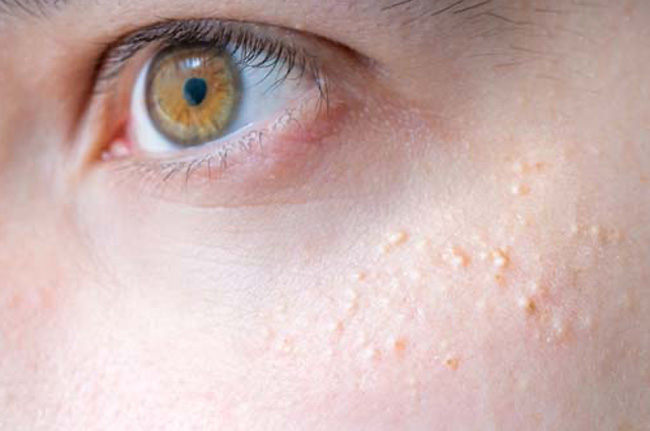
Milia
Milia are very small, white, hard keratin-filled cysts which lie superficially under the surface of the skin, commonly around the eye area. They are often mistaken for whiteheads, but in fact, milia are tiny cysts that are located immediately below the epidermis, the very outer layer of skin, making their distinctive colouring so visible. The white comes from an excess build-up of keratin, which is a natural part of the skin.
It is not known why milia develop in adults: unlike some skin conditions they don’t seem to be related to diet, lifestyle or health issues.
While they aren’t a medical risk, many people find milia unsightly and would prefer to remove them.
They can be safely removed using advanced electrolysis.
The tip of the finest, smallest needle possible (about the size of an eyelash) is introduced into. the Milia and a tiny energy current is discharged, destroying the Milia which then disappears.
The time taken to treat this condition will depend on the size, number and of Milia to be treated. Your practitioner will advise during the consultation if the problem can be treated in one session or if a course of treatment is likely to be required.
Clients should expect some redness following treatment and some small scabs can form, which will drop off a few days following treatment.
Price from £130
Seborrheic Warts
A seborrheic wart (keratosis) is a harmless warty spot that develops in later life. Some people only have one or two but some people inherit a tendency to develop a very large number of them. The precise cause of seborrheic warts is not known. They are extremely common and occur in males and females of all races, typically beginning to erupt in the 30s or 40s. They are uncommon under the age of 20 years. Although harmless, they can be unsightly and embarrassing
They can be safely removed using advanced electrolysis.
The tip of the finest, smallest needle possible (about the size of an eyelash) is introduced into. The wart and a tiny energy current is discharged, this then dries up and destroys the wart which then disappears.
The time taken to treat this condition will depend on the size, number and of warts to be treated. Your practitioner will advise during the consultation if the problem can be treated in one session or if a course of treatment is likely to be required.
Clients should expect some redness following treatment and some small scabs can form, which will drop off a few days following treatment.
Price from £130

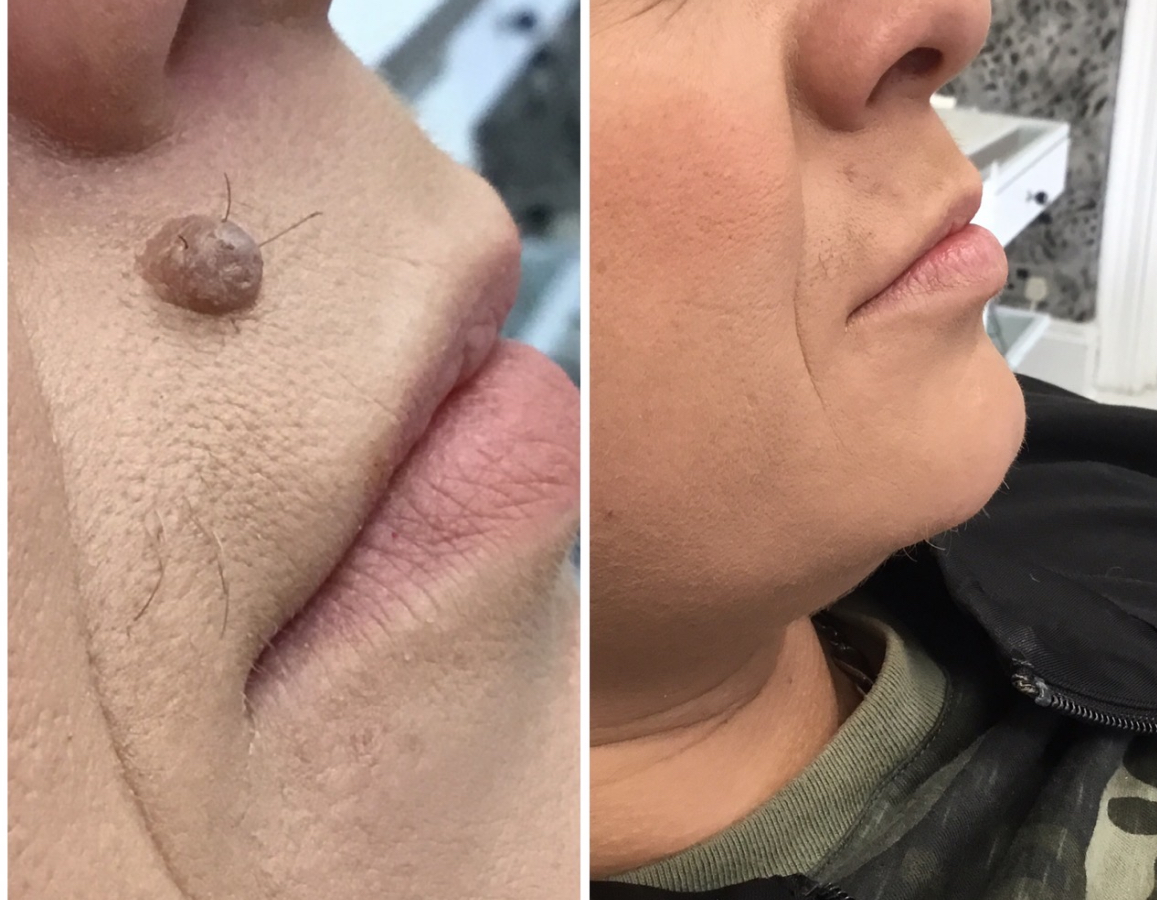
Reduction of Skin Moles
Congenital moles, are moles that are present at birth. These types of moles can range in size. They can be at risk of developing into melanoma later in life and should be monitored as you enter adolescence and adulthood.
Acquired moles are moles that appear during childhood and adulthood.
Moles are typically slightly raised with regular borders and dark pigmentation, although they can range in colour from tan to dark brown. They can appear anywhere on the skin, alone or in groups.
Moles, are common abnormalities that can be a source of embarrassment or irritation for some people. If you decide that you would like them to be reduced, we can carry out a simple procedure to achieve this.
At no point are we removing the moles by cutting into the skin, no excision is
made and therefore have nothing physical to send for histology. We are gently
treating them for an improved cosmetic finish.
If there is any cause for concern over a mole then Electrolysis treatment is not
recommended, and we will not proceed, and we advise patients to seek medical expertise.
We assess every mole for suitability before treatment to current NHS
standards which include, Symmetry, Border, Colour, Diameter and
Evolution and refer more back to the NHS than we treat.
Almost all common lesions are benign, however if you have a mole you wish to be treated, we ask that have it checked by a by your GP. And a letter of referral with their findings is required prior to treatment.
Removal of non-malignant moles is classed as a cosmetic treatment and is no longer available on the NHS.
Price £295
Skin Tags
These are very common and usually found around the neck, nose, and eye lids or areas of friction such as the underarm or the groin area. They are also commonly found in areas where clothing rubs against the skin such as bra straps.
They are harmless but can be both unsightly and irritating.
Removal is classed as a cosmetic treatment and is no longer available on the NHS. You should never attempt to remove skin tags yourself because they can bleed heavily.
The tip of the finest, smallest needle (about the size of an eyelash) is introduced along the line of the base of the tag and a tiny energy current is discharged. The current destroys the vessels feeding the tag thus starving it of any nourishment resulting in its demise.
The time taken to treat this condition will depend on the size, number and of tags to be treated. Your practitioner will advise during the consultation if the problem can be treated in one session or if a course of treatment is likely to be required.
Clients should expect some redness following treatment and some small scabs can form, which will drop off a few days following treatment.
Price from £130

Spider Naevus
Spider Naevus is a central, dilated blood vessel with capillaries radiating away from the centre. They are often found in isolation or grouped together in areas such as the cheeks, nose chin and forehead.
They can become quite unsightly and difficult to hide under makeup.
Removal is classed as a cosmetic treatment and is no longer available on the NHS.
They can be caused by many factors, including ageing, pregnancy, harsh weather and smoking.
The tip of the finest, smallest needle (about the size of an eyelash) is introduced along the line of the capillary and a tiny energy current is discharged. The current will cauterise the vein, causing the blood to coagulate, come to the surface and then disappear.
The time taken to treat this condition will depend on the size, number and of Naevus to be treated. Your practitioner will advise during the consultation if the problem can be treated in one session or if a course of treatment is likely to be required.
Clients should expect some redness following treatment and some small scabs can form, which will drop off a few days following treatment.
Price from £130
The Common Wart
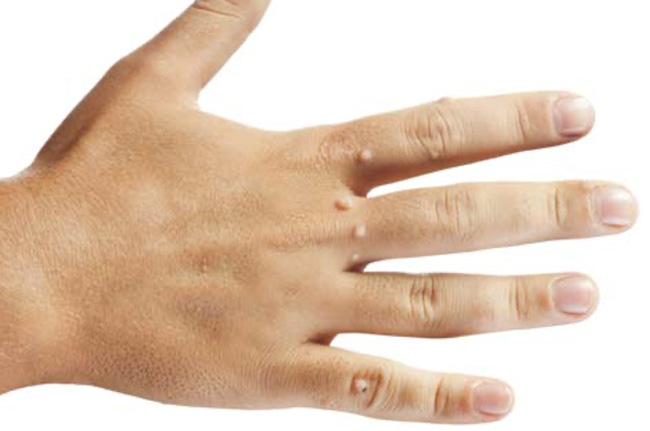
Warts are typically small, rough, and hard growths that are similar in colour to the rest of the skin While they usually occur on the hands and feet they can also affect other locations. One or many warts may appear. Warts are very common, with most people being infected at some point in time. Although harmless, they can be unsightly and embarrassing.
Removal is classed as a cosmetic treatment and is no longer available on the NHS.
Without treatment, most types of warts resolve in months to years, however they can be safely removed using advanced electrolysis.
The tip of the finest, smallest needle possible (about the size of an eyelash) is introduced into. the wart and a tiny energy current is discharged, this then dries up and destroys the wart which then disappears.
The time taken to treat this condition will depend on the size, number and of warts to be treated. Your practitioner will advise during the consultation if the problem can be treated in one session or if a course of treatment is likely to be required.
Clients should expect some redness following treatment and some small scabs can form, which will drop off a few days following treatment.
Price from £130

Thread Veins
Many patients develop a high facial colour or redness, especially in the cheek area, but can also be affected on the nose, chin and forehead. This is sometimes due to an increased level of small broken capillaries at the skin surface. These capillaries can become quite unsightly and difficult to hide under makeup
Removal is classed as a cosmetic treatment and is no longer available on the NHS.
They can be caused by many factors, including ageing, pregnancy, harsh weather and smoking.
The tip of the finest, smallest probe needle (about the size of an eyelash) is introduced along the line of the capillary and a tiny energy current is discharged. The current will cauterise the vein, causing the blood to coagulate, come to the surface and then disappear.
The time taken to treat this condition will depend on the size, number and of capillaries to be treated. Your practitioner will advise during the consultation if the problem can be treated in one session or if a course of treatment is likely to be required.
Clients should expect some redness following treatment and some small scabs can form, which will drop off a few days following treatment.
Price from £130


